
Not every roof project starts with a full replacement. Sometimes the right solution depends on the condition of the roof, the customer’s budget, and what can realistically be done to improve performance without taking on unnecessary work.
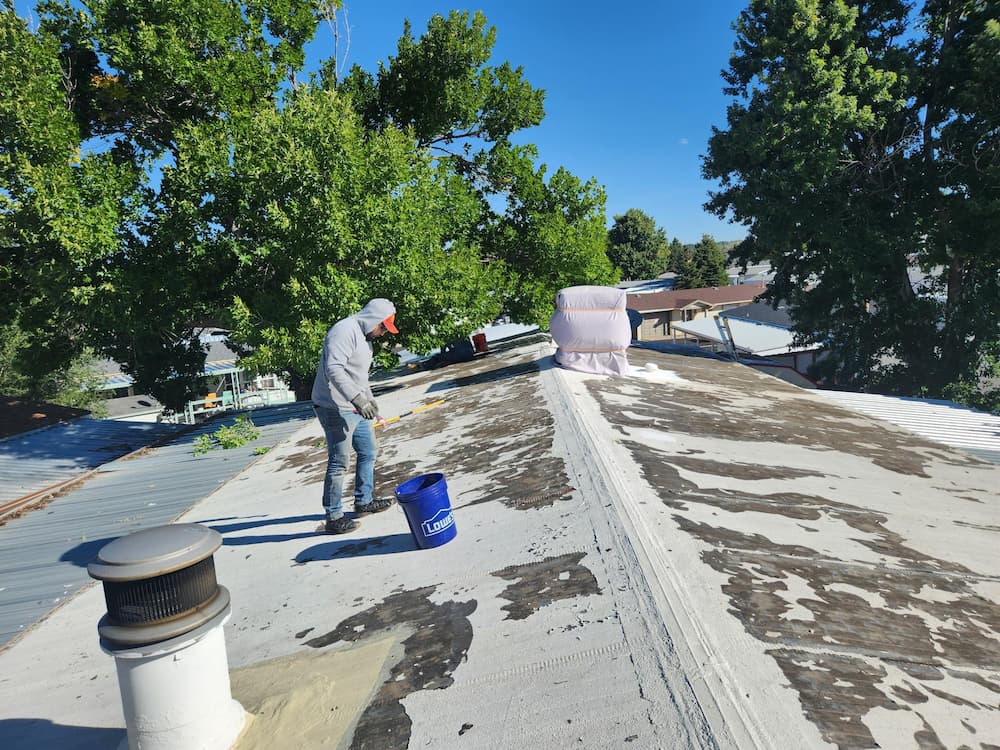
For this project, the roof was in poor condition. It had visible wear and debris buildup, and the customer was working with a very limited budget. At Done Right Roofing & Exteriors, our job was to help the customer find a practical path forward: clean the roof, prepare the surface correctly, and apply a coating system that would improve the roof without turning the project into a full replacement.
The result was a roof that looked much better and gave the customer relief at a time when cost was a major concern
Starting With the Condition of the Roof
The first thing we had to address was the roof’s existing condition.
A roof coating is not something that should be applied over dirt, loose material, or debris. If the surface is not properly cleaned, the coating may not bond correctly. That is why preparation is a major part of the job.
For this project, we scraped the roof and pressure-washed the debris. This step helped remove loose material and gave us a cleaner surface to work with before applying the coating system.
This is one of the details homeowners and property owners often do not see from the ground. The finished white surface is the most visible part, but the quality of the job depends heavily on the work done before the coating is applied.
Why Surface Preparation Matters
Roof coating is not just paint. It is a roofing application that needs the right surface conditions.
If a roof is dirty, uneven, or covered in loose debris, the coating can fail earlier than it should. Preparation helps the base coat bond to the existing roof and allows the fabric reinforcement to sit properly in the system.
On this project, scraping and pressure washing were necessary because the roof had been neglected and needed to be cleaned before any coating work could begin. This did not make the roof new, and it was not presented as a full replacement. It was a practical restoration approach for a customer who needed improvement within a limited budget.
That distinction matters. A coating project should be explained honestly. It can be a useful option in the right situation, but it still depends on the roof’s condition, the preparation, and the correct application of the system.
Applying the Base Coat and Fabric
After cleaning the surface, we applied the base coat.
The base coat is the first part of the coating system. It creates the foundation for the next layer and helps prepare the roof for reinforcement. On this project, we installed fabric embedded into the base coat. Fabric reinforcement is used to strengthen the coating system in key areas and help create a more durable surface. It is especially important when the roof needs additional support across seams, transitions, or worn areas.
Embedding the fabric into the base coat is a detail that has to be done carefully. The fabric needs to sit properly within the coating, not loosely on top of it. If the material is not embedded correctly, the roof can end up with weak spots or uneven coverage. For us, this stage was about making sure the roof had a reinforced layer before the top coat was applied.
Applying the Top Coat
Once the base coat and embedded fabric were in place, we applied the top coat.
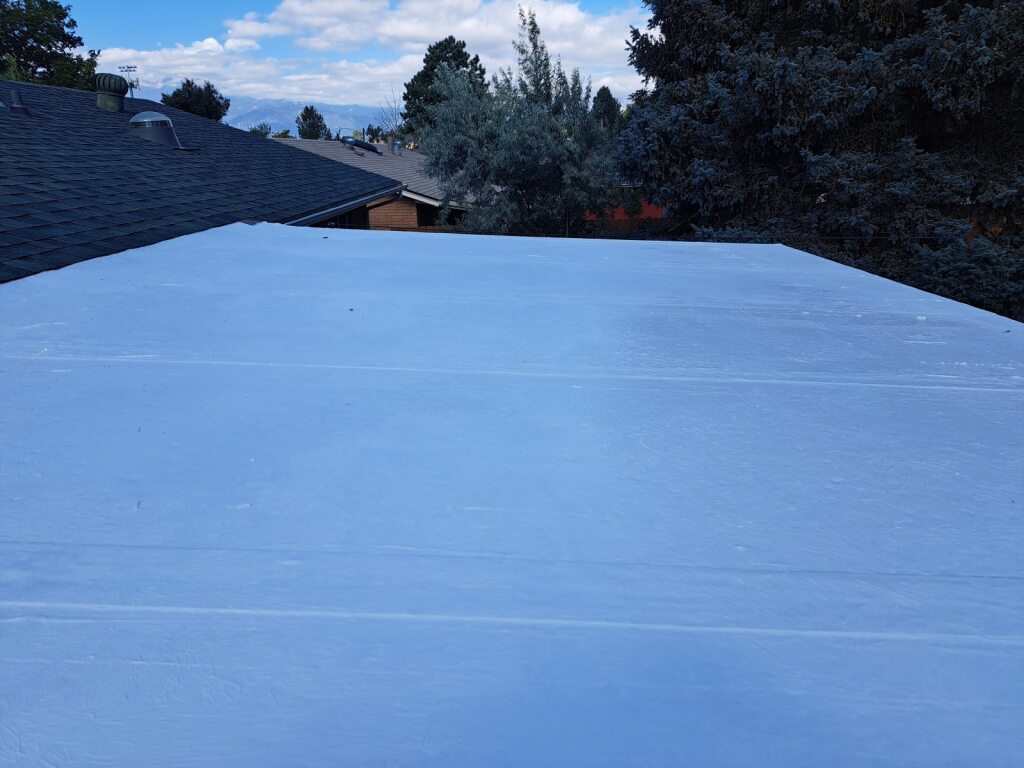
The top coat is the visible finishing layer. In this case, it gave the roof a cleaner, brighter, and more uniform appearance. More importantly, it completed the coating system over the prepared and reinforced surface. The difference in appearance was significant. The roof went from poor condition to a much cleaner finished surface. For the customer, that mattered not only because the roof looked better, but because the project gave them a solution that fit their financial situation.
Working With the Customer’s Budget
One of the most important parts of this job was the budget.
The customer had limited funds, and a larger roofing project may not have been realistic at that moment. Instead of pushing a solution that did not fit the situation, we worked with the customer and completed a coating project that addressed the roof’s condition within the available budget.
That is part of doing roofing work responsibly. The best option is not always the most expensive option. The right recommendation depends on the roof, the customer’s goals, and what will provide the most practical value.
In this case, the coating system helped improve the roof and gave the customer peace of mind without forcing a full replacemen
A Practical Roof Improvement
This project is a good example of how roof coating can be useful when the situation calls for it.
The roof needed attention. The customer had a limited budget. Our team scraped and pressure-washed the debris, applied the base coat, embedded fabric into the base coat, and finished the system with a top coat.
At Done Right Roofing & Exteriors, we believe roofing work should be handled clearly and honestly. If a roof needs replacement, that should be explained. If a coating system is a reasonable option, that should be explained too.
For this customer, the coating project provided a practical improvement, a better-looking roof, and relief at a time when budget mattered. That was the goal of the job: to work with the customer, improve the roof’s condition, and complete the project correctly.

